
Living the Gospel . . .

Excellent article!
Living the Gospel Wholeheartedly in a “Yes, But” World
MAY 24, 2018 BY BRAD ROTH
taken from Patheos.com
How does Christian faith frame our understanding of community security? We’ll often hear that yes we’re called to live out the ideals of the gospel, but we live in a broken world.
The sentiment is true enough. But what strikes me about this line of thinking is the subtle way it seems to imply that the gospel–the good news about and by Jesus–is something not quite fit for the violent world we live in. Love your enemies, give to those who ask of you, turn the other cheek, forgive as your Father has forgiven. Those are lovely sentiments–to be honored, for sure–but seemingly designed for a gentler world, a softer, safer, more pastel world where bad guys with guns don’t mow down school children. It’s a dangerous place out there. And so in this great, big, rough and tumble world–many suppose–we’ve got to footnote and bracket and asterix the gospel to make it possible to live it out. We’ve got a good gospel in a broken world, so we split the difference.
I get it. Hard choices abound. The gospel of Jesus can seem like teaching for kinder and gentler times.
Except Jesus didn’t live and teach in kinder and gentler times. The Roman world was a empire-building, slave-keeping, barbarian-skull-crushing society where it was the citizen’s duty to kill malformed infants by exposure. Jesus got crucified–that most debased and debasing form of execution–for his teaching. The great rabbi wasn’t even offered hemlock. Jesus knew what he was teaching, understood the implications, was not naive to the ways of the world. He taught precisely what the world needed to hear. If anything, we’re living in kinder and gentler times, times impacted by two-thousand years of the gospel rejigging the Western mind. Human rights. The value of every person, regardless of age or capacities. Those are gospel values.
We so often hold a “yes, but” concept of the gospel. We’re called to love our enemies. Yes, but they want to bomb us. We’re called to be merciful. Yes, but they only respect force. We’re called to turn away from hatred, adultery, lies, revenge. Yes but, what can we say? TV leaves its skim.
It’s interesting that in the fifth century when St. Augustine put his prodigious mind to the challenge of Christian governance and the use of force, his theological angle was not to punch an escape hatch in Jesus’ teaching. Augustine counseled that the use of force must never be undertaken with hatred toward the enemy, must see peace as its goal, and must be carried out within the broader matrix of the Christian virtues, like chastity, sobriety, and moderation. Just war, for Augustine, was waged (hesitantly, with reservation) as an expression of love of neighbor. That is to say, for the Christian even war must be waged as the outworking of the gospel.
Regardless of whether or not we ultimately agree with Augustine’s conclusions, his instinct to live the gospel wholeheartedly is compelling. Augustine does not offer a yes, but approach to the Christian life. For him, the teaching and example of Jesus informs everything we will undertake as his followers: work, play, speech, worship, family, community. Even war. All of human life is inflected and informed by the gospel.
What this means is that as followers of Jesus, our goal is to do all things as an expression of Jesus’ teaching and ways. This is true for those who heal and help. But it’s just as true (and maybe even more urgently so) for those who police and protect–sometimes with deadly force.
It turns out that yes, but is a cul-de-sac that actually marginalizes and diminishes the gospel. There’s no halfway with Jesus. We follow his gospel wholeheartedly.
Or we don’t.

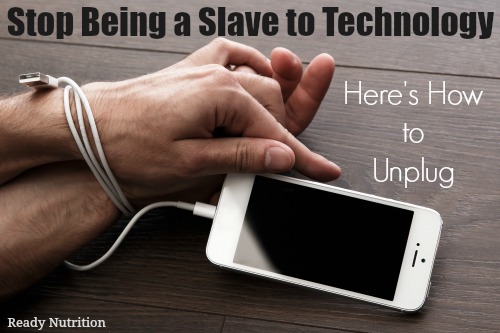
Stop Being a Slave, Period.
(My Note:
I must say – when people say “unplug from tech” – we usually think of our entertainment devices: phones, televisions, etc. In my own life – it’s more than that.
I got rid of my clothes dryer last year because 1. it eats electricity like a fiend and I am budget conscious but also 2. because hanging clothes out to dry – relaxes me. It’s good for my mental health and stress levels.
The same with the dishwasher. I hand wash my dishes. It keeps my fingernails clean without my even having to try, and it also is relaxing, not to mention the metaphysical cleansing that happens with interaction with water. I think it’s way more cost effective than a dishwasher as well although I haven’t researched and proven that. It’s at least not using as much electricity, I am assuming that much. I do use the dishwasher – to DRY my dishes in. It keeps them off the counter space while they are drying.
Some of our “devices that are supposedly invented to ease our workload and give us convenience – in my opinion only speed our lives up and stress us out. They just give us the opportunity to do more work faster. And I don’t think that’s always a good thing. Then we take anti-depressants and drink alcohol to cope with the heightened speed and pace of our lives, and that is for our best, how?
Just my opinion, but just because others say something is awesome and for our best – doesn’t mean it actually IS. Judge these things by your own standards, not society’s or commercial manufacturers, who have their own agendas in mind.
And now for the featured article lol:)
* * *
“Stop Being a Slave to Technology: Here’s How to Unplug”
by Joshua Krause
taken from www.readynutrution.com
If you could pluck any of your ancestors from any period of time in history, and send them to the world we live in now, they would be in for quite a shock. All of the technology that we have at our disposal would seem like magic to them. The diseases we can cure and prevent, the speed with which we can communicate with anyone around the world, the devastating weapons we use to defend ourselves with, and the machines we use to travel from place to place, would all leave them in awe.
They’d have to pick their jaws up from off the floor after they see what kinds of energy we use, and I’m not even talking about nuclear power. For people who relied on firewood for most of their energy needs, the cost and energy density of crude oil would blow their minds. I’m sure that seeing the accessibility of food in our society would cause a similar reaction in their minds. The idea that some people in the West only need to work a few hours a week to cover their food and energy costs, would leave your ancestors shaking.
And then they would meet us. The residents of this magical high-tech world.
They would see people who spend more time staring and laughing at their ghostly screens, than they spend interacting with other human beings. They would meet us, a generation of people who are terrified of the sun, and who can’t step outside without slathering themselves in odorous creams (or who barely spend any time outside at all). They would be introduced to people who can’t find their way home or solve any practical problem without first consulting the computers in their pockets. They would come face to face with a society that is willing to sacrifice privacy for high-tech convenience.
They would see a society full of people who are completely out of touch with nature, and completely helpless without all of their gadgets. And more importantly, they would discover how incredibly stressed and unhappy many of us are, despite the wonders at our disposal.
Truly, we are slaves to technology. Here’s what you should do if you want to break free, and get back in touch with your humanity.
Stop Multitasking
Multitasking is the bane of the modern world. We clean the house with the TV on in the background, we text on our phones while we eat dinner, and we talk on those same phones while we drive. People in the modern world are obsessed with cramming as many tasks in their day as they can, and they pride themselves on their ability to multitask. And even though most of us like to believe that we’re getting a lot done and that we’re really good at multitasking, in reality we all really suck at it.
Every scientific experiment that has tested people on their ability to multitask, has shown that it’s not an ability any of us have. Anytime we try to tackle more than one task at a time, we perform across the board. Unfortunately, the gadgets we own have made it incredibly easy for us to get distracted. We use our gadgets as a crutch and an excuse for when we don’t want to do the task at hand. So stay focused and do one thing at a time. You’ll do a better job, you’ll learn more, and you’ll enjoy yourself more.
Get Back in Touch With Nature
Despite how far civilization has advanced over the years, human beings still have pretty much the same brains and bodies that we had when we were hunter gatherers. In a sense, we are an anachronism. We live in this sophisticated, high-tech wonder world filled with 9-5 jobs, cars, phone bills, taxes, and gadgets, but we’re still the same people who used to spend the majority of their days in nature.
At heart, the outdoors is where we really feel comfortable, yet we live in a time where most of us, especially our children, spend so very little time there. Our brains were never designed for the task of staring at screens for 11+ hours a day, and we’ll never be truly happy if we don’t set the phone down and spend some time outside. We evolved in the outdoors. It’s where we belong. If we don’t set aside time to be away from the hum our gadgets, and to enjoy nature, we’ll never really feel fulfilled or satisfied. It might even make us a little crazy.
Try to Remember How You Killed Time Before The Internet
If you’re old enough to remember what life was like before the proliferation of the internet and smartphones, or if you’re young but you remember what life was like before your parents gave you access to those technologies, then you’re in luck. You actually have some sense of how normal human beings are supposed to behave when they don’t have anything important to do.
Do you remember what you used to do when you weren’t working, doing chores, or studying? Did you doodle or write? Did you play the guitar? Did you tinker with stuff lying around the house? Did you go for a walk around the neighborhood? Those are the sorts of things that people used to do when they didn’t have anything important on their plates.
These days we feel compelled to fill every waking moment with electronic entertainment. We act like boredom is a crime, and the only way to stay out of jail is to check our email and watch another episode of whatever is on Netflix. We have to keep our brains in a constant state of hyper-stimulation. We fear quiet, contemplative activities. If you really want to unplug from technology for a while, then you have to teach yourself to not reach for digital entertainment every time you find yourself with an empty moment. You have to kill that knee jerk response, and learn how to enjoy the things you do, not the things you watch other people do.
Quit Using Gadgets to Solve All your Problems
Undoubtedly, the internet is one of the most useful things that humanity has ever invented. Having that vast library of information at our fingertips is a godsend whenever we have a problem that needs solving. It’s provided a voice for countless ideas and people who would never have had a voice in the past. Unfortunately, it’s also making us stupid.
Whenever we have a problem, we’re faced with two solutions. Figure it out ourselves and learn a thing or two along the way, or if this problem is out of our depth, we enlist the help of a friend or we hire a guy to fix it. If the problem arises again in the future, we know who to call. We all have a ‘guy’ that we refer to when a car or a computer needs fixing.
We also treat the internet as ‘that guy.’ We refer to it anytime we need to fix something, or find directions, or remember an obscure fact. Every time we do that, our ability to remember and our ability to learn, dies a little. We know that if any given problem shows up again, we can just look it up. Our brains don’t bother to retain knowledge when we know that it can easily be recalled for us at the click of a button.
In the future, always try to do it yourself first before you ‘look it up.’ Try to remember a phone number before you look for it in your phone. Try to remember that witty quote before you search for it on the internet. Take a shot at finding your way home before you refer to your GPS. Your brain is like a muscle, and if you never bother to use it, you will lose it.
Do Nothing At All
I dare you. No, I double dog dare you, to do nothing at all. Do you even remember the last time you just sat alone in silence for a while? Have you stopped to consider how crazy it is that most people can no longer stand to be alone with their own thoughts? That’s not an exaggeration. The inability to withstand silence is a sign that you’re a slave to technology.
Scientists have conducted experiments where they place people in a room with blank walls, by themselves for 15 minutes, and tell them to just sit and enjoy their own thoughts. A third of the participants admitted to cheating and checking their phones. Most of them admitted that it was an unpleasant experience. Then they introduced a device that would give these participants a voluntary electric shock. Two thirds of the men and a quarter of the women in this study chose to shock themselves out of pure boredom. Many of us would prefer physical pain over doing nothing at all. That’s freaking sad.
If you really want to stop being a slave to technology, then every once in a while you should take time out of your day to do nothing at all. You don’t have to fill every moment of your waking life with vapid entertainment. Meditate, or stare at a wall, or quietly think about your future. It’s a normal, healthy part of being human, and our technology has robbed us of our ability to quietly be ourselves. So take back the reins, unplug yourself for a while, and enjoy being human again.
Joshua Krause was born and raised in the Bay Area. He is a writer and researcher focused on principles of self-sufficiency and liberty at Ready Nutrition. You can follow Joshua’s work at our Facebook page or on his personal Twitter.
Joshua’s website is Strange Danger
This information has been made available by Ready Nutrition
* * *
Angels and demons
So humanly TRUE.
Excerpt from “A Summer Evening’s Meditation” by Anna Laetitia Barbauld

photo credit: “Orion on the rise!”: Bob King
Lines 14 – 60
(spaces mine)
The shadows spread apace; while meeken’d Eve
Her cheek yet warm with blushes, slow retires
Thro’ the Hesperian gardens of the west,
And shuts the gates of day. ‘Tis now the hour
When Contemplation, from her sunless haunts,
The cool damp grotto, or the lonely depth
Of unpierc’d woods, where wrapt in solid shade
She mused away the gaudy hours of noon,
And fed on thoughts unripen’d by the sun,
Moves forward; and with radiant finger points
To yon blue concave swell’d by breath divine,
Where, one by one, the living eyes of heaven
Awake, quick kindling o’er the face of ether
One boundless blaze; ten thousand trembling fires,
And dancing lustres, where th’ unsteady eye,
Restless, and dazzled wanders unconfin’d
O’er all this field of glories: spacious field;
And worthy of the Master: he, whose hand
With hieroglyphics elder than the Nile,
Inscribed the mystic tablet; hung on high
To public gaze, and said, adore, O man!
The finger of thy GOD. From what pure wells
Of milky light, what soft o’erflowing urn,
Are all these lamps so fill’d? these friendly lamps,
For ever streaming o’er the azure deep
To point our path, and light us to our home.
How soft they slide along their lucid spheres!
And silent as the foot of time, fulfil
Their destin’d courses: Nature’s self is hush’d,
And, but a scatter’d leaf, which rustles thro’
The thick-wove foliage, not a sound is heard
To break the midnight air; tho’ the rais’d ear,
Intensely listening, drinks in every breath.
How deep the silence yet how loud the praise!
But are they silent all? or is there not
A tongue in every star that talks with man,
And wooes him to be wise; nor wooes in vain:
This dead of midnight is the noon of thought,
And wisdom mounts her zenith with the stars.
At this still hour the self-collected soul
Turns inward, and beholds a stranger there
Of high descent, and more than mortal rank;
An embryo GOD; a spark of fire divine,
Which must burn on for ages, when the sun,
(Fair transitory creature of a day!)
Has clos’d his golden eye, and wrap’d in shades
Forgets his wonted journey thro’ the east.
-copied from: www.digital.library.upenn.edu.

Interesting exploration of “A Summer Evening’s Meditation” : Anetta Newcamp, Examining Anna Laetitia Barbauld’s poem, “A Summer Evening’s Meditation”

Great short video on “Stars: The Art and Science“
April 2018 Full Moon
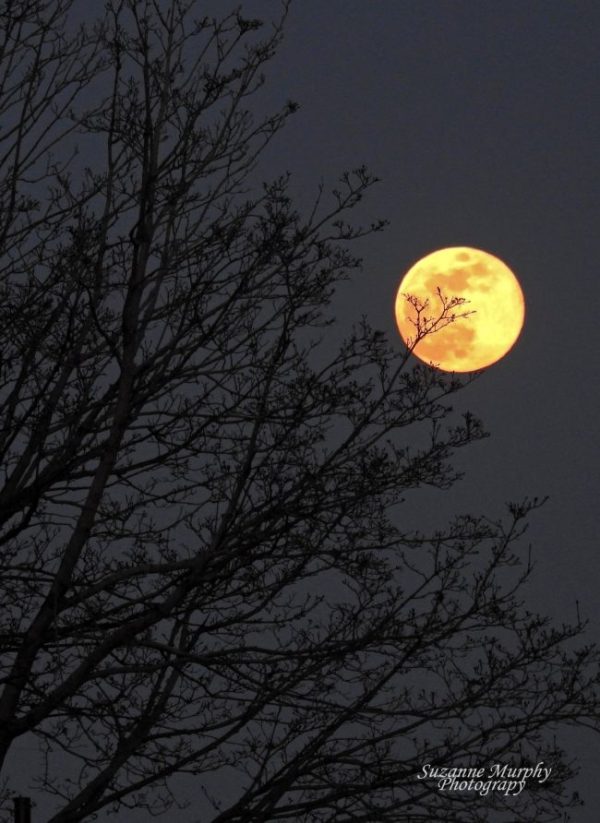
“Keep your physical body well grounded to better process the frequencies that are bombarding you and keep you out of mental spin…”
“We learn with each turning of the Moon to hold our lives as a choice.
“Which will it be here? Crisis or Opportunity?”
© Copyright 2018 ~PAT LILES All Rights Reserved
And the Meek Shall Inherit the Earth

Children of the stars they say
Reaching
Shackled to our feet of clay . . .
The coin that knows but one side
Seeking
Self-knowledge history denied.
Almost comprehend, not quite
Feeling
Never growing to full height
And stepping to an off beat
Fated
Trapped beneath the sun’s bright heat.
Stars pattern in the night sky
Small ones always asking why
Doomed to crawl and then to die
Children of the
Stars can’t
Fly.
Copyright 1992 mds. All Rights Reserved.




 Fiery K. Tarot