Elder Medicine

Fiery K. Tarot's avatarThe Spinsta Life

from Mystic Mamma

FULL MOON in Capricorn June 27th /28th 2018

FULL MOON in Capricorn seeks to gift us CLARITY by calling forth the Elder within us to rise.

She invites us to step into our center and meet the teacher within the within that embodies our center point within the karmic wheel of life.

We have in every new moment of the present, the ability to shift what has been and create a new action with new ripples.

We are being asked to embody our responsibility as human Beings and meet whatever is rising.

Not with old fangled reactionary impulses, but with an open presence that can intersect the past with new understanding.

Elder medicine teaches us that cultivation of wisdom is born out of accountability of our actions and a compassionate understanding of their effects on others.

We gain in wisdom every time we step through that threshold. 

View original post 64 more words

The Book of Baba Yaga

Baba Yaga is one of my favorite witches!

reprinting this from Patheos:

JUNE 15, 2018 BY PAGAN VOICES

About 4 years ago, I took a break from being a man. Even though I’ve always felt a strong affinity for the societally defined trappings of masculinity, the labels “man” and “male” suddenly felt like clothes that no longer fit. I experienced a strong need to add what our culture deems “feminine” elements to my everyday presentation—makeup, nail polish, bright and colorful clothes, etc. Yet I definitely didn’t feel like a woman either. When I heard the term “genderqueer,” I strongly identified with it.

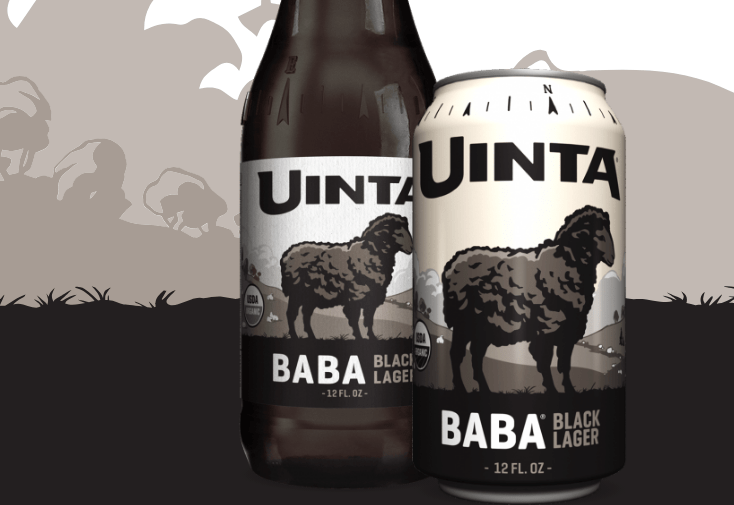
Around the same time, an old friend texted me an ad for “Baba Beer.” “Baba” for us referred to an Alanis Morissette song. “Look!” he wrote jokingly, “Alanis has her own beer!” Yet as I read his message, I wasn’t thinking about Alanis. I was thinking about Baba Yaga.

baby yaga 1

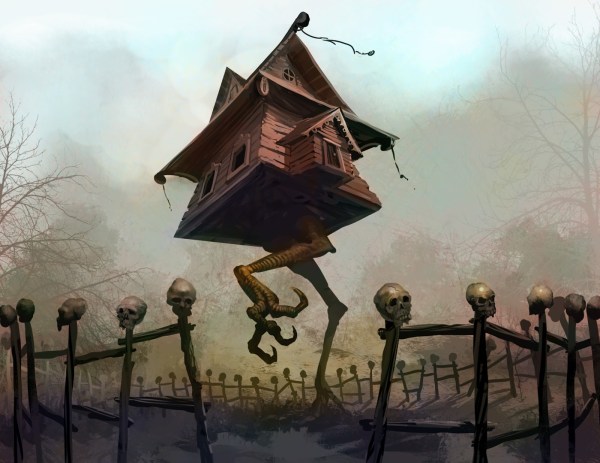
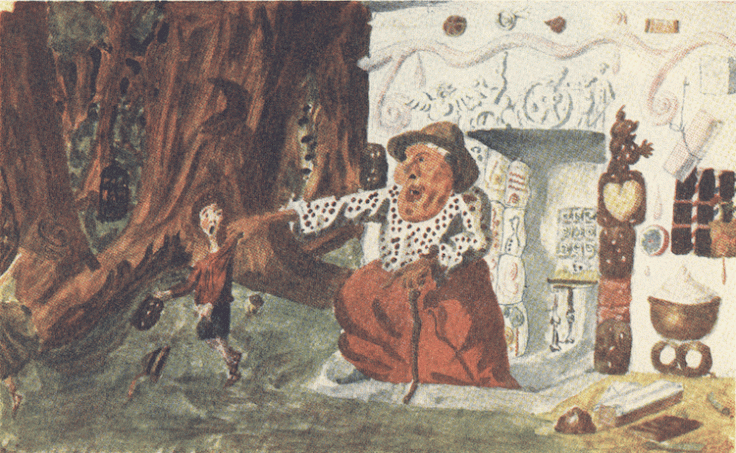
Baba Yaga is a witch/earth goddess from Russian folklore. She lives deep in the forest in a house on chicken legs. Rather than the more traditional broomstick, she flies in a mortar, using the accompanying pestle to steer. She’s a dangerous and wonderful figure who tests the wit and mettle of anyone who approaches her hut seeking help. She may grant you the tools necessary to succeed in your quest, or she may eat you.

I have no idea why I thought of Baba Yaga. I wasn’t a Pagan yet. I loved myths and fairy tales, but I was only vaguely aware of her story. Still, after getting that text, her name stayed with me. I had been looking for a new focus for my next poetry book, and the phrase “The Book of Baba Yaga” kept appearing in my head.

So I read the folktales associated with her and began writing poems. She proved to be an excellent metaphor. Versed in arcane knowledge yet deeply rooted in the earth, vicious yet oddly maternal, I explored the various facets of her character. I didn’t really think of her as anything other than a mythological figure, a darker version of the Wise Woman archetype. It wouldn’t take long for me to realize that Baba Yaga is quite real, and she was, as one friend put it, stirring me in her mortar.

Not long after I started writing the book, I began to go through a lot of personal troubles. For a variety of reasons, my until then manageable anxiety and depression became unmanageable. I started having panic attacks which would cause me to hyperventilate and wail. Literally, I would wail. It reminded me of those ponderous Biblical descriptions of hell as a place where there is “much wailing and gnashing of teeth.” Later I would realize in therapy that I was, almost two decades after the fact, grieving years of childhood abuse.

Baba_Yaga_by_Koka_1916
Public Domain image via WikiMedia.

The force of my reaction frightened me as much as the attacks themselves. It made me feel irrevocably broken and, for some reason, completely unlovable. Desperate for relief, I started meditating.

In meditation, I became aware of the energies that surround us. I realized I could subtly manipulate these energies in playful ways—e.g., bouncing a luminescent ball between my hands. It brought me back to high school and my few tentative attempts at practicing witchcraft. If what I was doing in meditation was a form of magick, maybe it could help me heal myself.

Not surprisingly, all these new developments began to appear in my writing. Mental health, gender identity, magick…as I continued to work on “The Book of Baba Yaga,” I realized that for me she stood at the nexus of these things. As a monstrous witch/benevolent wise woman who dwells in the heart of the dark forest, she’s an ideal emissary of the subconscious mind where pain coexists with potential. Furthermore, her strong association with the divine feminine can compel a man to explore his own relationship with femininity.

But how does one define femininity? We live in an era where many are rightly questioning what it means to be a woman or a man, or if these categories even truly exist. In keeping with this perspective, I did not experience the divine feminine as qualities stereotypically associated with women (empathy, intuition, tenderness, etc.). Instead, being a man under the magickal influence of a strong female deity taught me how to embrace in-betweenness. I began to better understand my motives for wearing make-up and nail polish. Although these are not inherently “woman things”—and Baba Yaga herself is certainly not the make-up and nail polish type—they are common symbols of femininity in the 21st century West. Not only that, but they were accoutrements that appealed to me personally. And by adopting them while simultaneously retaining my shaved head and beard, I was working through and proudly making visible to others my complex and contradictory nature as a human being. Baba Yaga was shaking me out of my worldview and refusing to replace my old certainties with new ones.

Existing between genders or transitioning to a different one is an important goal for some people. For me, existing between genders was a way to learn how to embrace ambiguity more generally and exist between my past and future selves.

baba yaga 2
She doesn’t play well for the cameras, Public Domain Image via WikiMedia.

Integrating these lessons and writing a book about it empowered me. It was this sense of power—along with therapy, medication, and the love of a good husband—that helped me learn how to manage my mental health. I still deal with anxiety and depression, but I no longer have the panic attacks. Things that used to trigger me in the day-to-day have also lost much of their bite. I feel more centered and more myself than ever before.

I think now about Baba Yaga’s destructive aspect—that of the witch who swallows you whole. I’ve come to believe that the emotional challenges I went through were a manifestation of this. My wounded inner child needed to be devoured by the goddess-witch so I could be reborn as a truer version of myself.

Interestingly, I’ve stopped wearing makeup and no longer identify as genderqueer. I suspect it’s because Baba Yaga has withdrawn now that I’ve found my path. Having internalized her lessons, I no longer feel drawn to the tools—for now. I’ve circled back to identifying as a cisgender man with the understanding that gender remains fluid and mercurial.

One final note—“The Book of Baba Yaga” has been retitled Divining Bones, and will be published by Sundress Publications in early 2019. You can probably guess who it will be dedicated to.

via The Book of Baba Yaga

Seven Reasons Why . . .

. . . We Need Mister Rogers More Than Ever

JUNE 6, 2018 BY PAUL ASAY, of Watching God

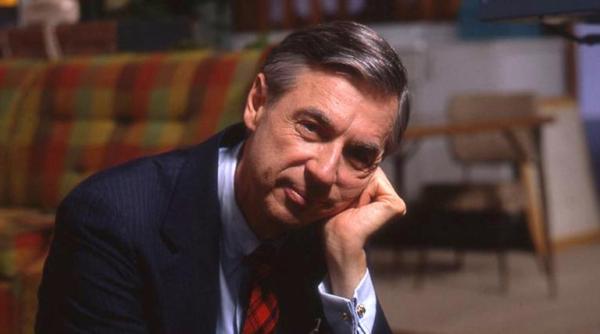
Photo: Fred Rogers on the set of his show Mr. Rogers Neighborhood from the film, WON’T YOU BE MY NEIGHBOR?, a Focus Features release. Credit: Jim Judkis

trolley.jpg

On Feb. 2, 1968—Groundhog Day—Simon & Garfunkel recorded the final version of their classic song “Mrs. Robinson” for their album Bookends. It includes one of the most poignant lines in all of pop music:

Where have you gone, Joe DiMaggio? Our nation turns its lonely eyes to you.

“I thought of him as an American hero and that genuine heroes were in short supply,” Paul Simon later told The New York Times. And indeed, in early 1968, they were. The country was mired in the Vietnam War. Protests raged at home. The country had never felt so divided, so angry. After the heroics of World War II and the unbridled American self-confidence of the 1950s, the United States must’ve felt like a stick bent to its breaking point, ready to splinter.

The country needed a hero.

On Feb. 19, 1968, just 17 days after Simon & Garfunkel put Mrs. Robinson in Bookends, it got one.

Most folks didn’t know it yet, of course. Mister Rogers’ Neighborhood, featuring a rather un-telegenic, soft-spoken minister as its host, director, singer, writer and puppeteer, was meant for kids too young to tie their shoes, much less write think-pieces for The New Yorker. But as Focus Features’ new, wonderful documentary Won’t You Be My Neighbor (out in theaters beginning this weekend) illustrates, he was a good hero for those turbulent times. And, I think, the sort of hero we need more than ever.

Fred Rogers wasn’t a television novice when he launched Mister Rogers’ Neighborhood on NET (the forerunner to PBS) in 1968. He’d worked on a show called The Children’s Corner for Pittsburgh’s WQED years before, introducing Daniel Tiger when (according to the movie) one of the live show’s ancient film clips broke.

But if Daniel’s introduction to the world of television was a spontaneous thing, Mister Rogers’ Neighborhood was anything but. As Neighbor unpacks for us, Rogers carefully thought through every word and lyric, almost every moment, crafting a show that would never talk down to its young viewers but wrap an arm around them and talk to them. Rogers called the space between his cameras and his viewers’ televisions “holy ground,” and indeed something sacrosanct took place there.

When you contrast what Mister Rogers did back then with our own frenetic entertainment culture—heck, with our entire national climate—it’s striking to see the difference, and feel just what we’re lacking. Consider:
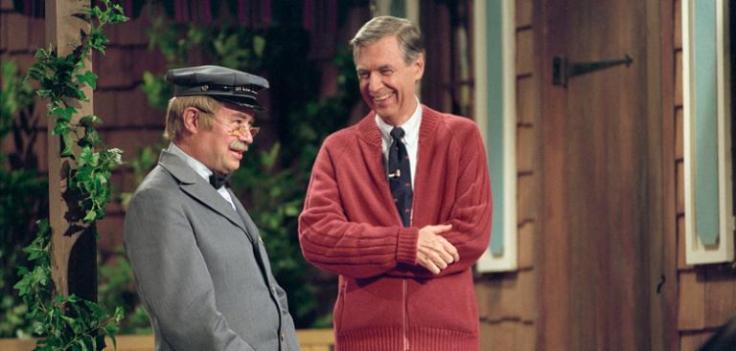
rogers2David Newell (left) and Fred Rogers (right) from the show Mr. Rogers Neighborhood in the film, WON’T YOU BE MY NEIGHBOR?, a Focus Features release. Credit: Lynn Johnson

He was quiet. “For Fred, silence was his delight,” we’re told in Neighbor. We’re treated to a montage of some of the many times that he stopped talking and just let his audience … listen.

Most folks would call that “dead air,” back then as they would now. Today, to sit in silence is practically a cultural sin. We bring our phones and devices of distraction with us wherever we go, even into the toilet stall. I do, too. It’s like we can’t stand to be alone with ourselves. To grow quiet. To think. Rogers reminds us that when we lose silence, we lose much more. We lose, maybe, a bit of ourselves.

He listened. This might be one of the most remarkable things I was struck with watching Neighbor: How well he listened to those around him—no matter how young they were, no matter what they said. Children might tell him something funny. Or tragic. Or profound. He treated each missive as a gift—an almost sacred message, from one child of God to another.

I used to think of myself as a good listener. I’m not so sure anymore. I “talk” for a living, here and elsewhere. And sometimes, even when I’m listening even to the people most precious in my life, I feel my attention wander. I can feel my eyes darting, looking for the next distraction; search the conversation for another opportunity to let folks know what I think. How many times have I lost an opportunity to listen and learn? How many moments have I lost to create a greater connection? More broadly, how many of our societal ills and angsts could be treated and even healed through just … listening? I think we’d be surprised.
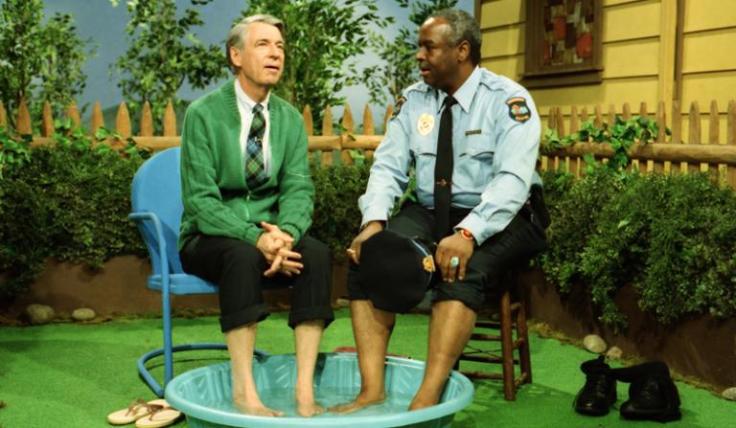
rogers 3Fred Rogers (left) with Francois Scarborough Clemmons (right) from his show Mr. Rogers Neighborhood in the film, WON’T YOU BE MY NEIGHBOR?, a Focus Features release. Credit: John Beale

He was gentle, but strong. In Neighbor, we see scenes aplenty when Rogers’ famous gentleness was mocked and lampooned. And indeed, his ultra-sincere persona and curious, almost lyrical-sounding voice can foster a very Rogers-esque stereotype of a milquetoast man. Truth is, he was anything but. He stood for things and, once he found his footing, never wavered from them. He stared down congress. He fought for racial equality. The very first week Mister Rogers’ Neighborhood was on the air, according to Neighbor, Rogers tackled the Vietnam War.

Today, we see politicians and pundits bluster and blow like big, bad wolves—huffing and puffing, bellowing and retracting what they just bellowed. Rogers did Theodore Roosevelt one better: He spoke quietly, and instead of carrying a stick, he bore only his convictions. And so often, they were enough.

We all have inconsistencies to our characters, of course. We sin. We fail. We think or say or do things we should not. Allof us do. Even, I’m sure, Mister Rogers. But everything I’ve read about him—and what I see in Neighbor—suggests that Rogers was as true to, and as honest with, himself, and thus to his audience, as anyone can be. He didn’t just pretend to listen: He listened. He didn’t just pretend to care: He cared. Tom Junod’s 1998 Esquire profile of Rogers illustrates that really well, and it might be one of the best profiles I’ve ever read. (caution, though. It can be profane at times.)
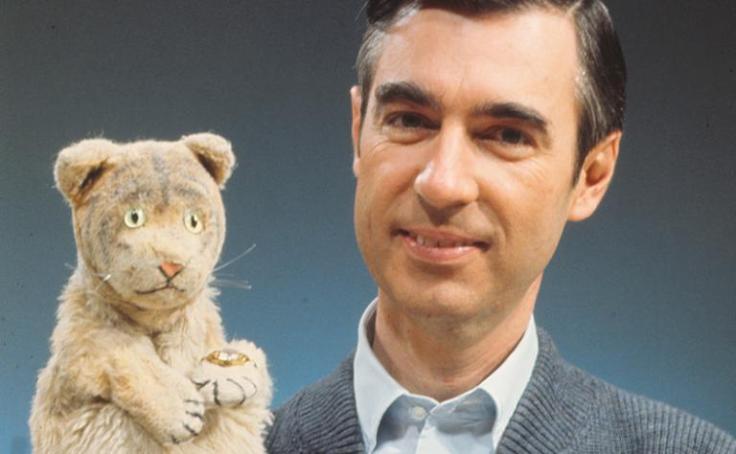
rogers 4.jpgFred Rogers with Daniel Tiger from his show Mr. Rogers Neighborhood in the film, WON’T YOU BE MY NEIGHBOR?, a Focus Features release. Credit: The Fred Rogers Company

He was vulnerable (in a way). Neighbor makes the case that Mr. Rogers’ puppet alter-ego was the watch-wearing Daniel Striped Tiger—sweet, shy and deeply vulnerable. Rogers admits in the movie that it’s far easier to let Daniel express his fears than he, as a grown man, to admit to them. But he, unlike most of us, still admits to them. And through Daniel, he gave the children he spoke to permission to express their own fears and doubts.

Funny that, in our social media age where we all share so much of ourselves, rarely do we share our vulnerability. We post our smiling vacation pictures and brag about our kids and express our deep political convictions in sometimes strident, shrill terms. But I think that often it’s our vulnerabilities, not our strengths, that make people gravitate toward us and allow them to trust us. I think that that’s part of what Paul meant in 2 Corinthians 12, when he told us that God’s power is made perfect in weakness. Rogers’ knew that, too. Our weaknesses open the door to fellowship. And that’s where strength is found.

He was devout. Rogers was an ordained minister, and throughout Neighbor we hear how Mister Rogers’ Neighborhood was his pulpit. He preached from his fake television house and told his young viewers that they were loved just as they were—but they still needed to learn and grow, too. And that brings us to, perhaps, Rogers’ most powerful, enduring message.

He believed in us all. That feels like a strong statement, but I don’t think it’s a stretch. Rogers believed in us all. He believed that all of us—young and old—were worthy of love. We were lovable.
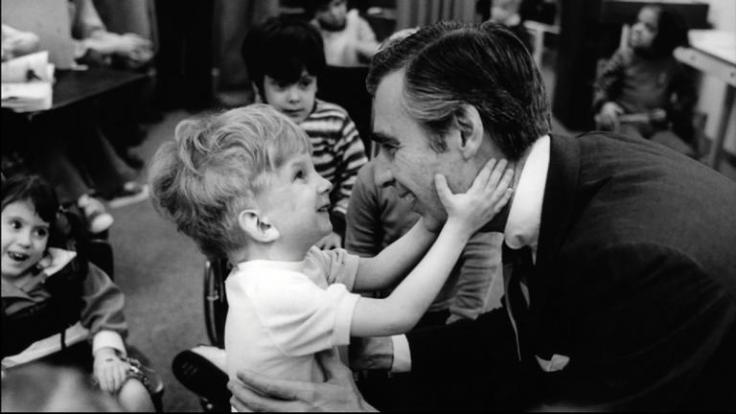
rogers 5.jpgFred Rogers meets with a disabled boy in the film WON’T YOU BE MY NEIGHBOR?, a Focus Features release. Credit : Jim Judkis


trolley

paul ansey.jpgAbout Paul Asay

Paul Asay is an author, journalist and entertainment critic who now serves as a senior associate editor for the popular Christian entertainment review site Plugged In (pluggedin.com). He has been published in a variety of other secular and Christian publications, including The Washington Post, The Gazette in Colorado Springs, YouthWorker Journal and Beliefnet.com. He has a love of old movies, a disturbing affinity for bad ones and an appreciation for all things geek.


Living the Gospel . . .

Excellent article!

 Living the Gospel Wholeheartedly in a “Yes, But” World
MAY 24, 2018 BY BRAD ROTH
taken from Patheos.com

How does Christian faith frame our understanding of community security?  We’ll often hear that yes we’re called to live out the ideals of the gospel, but we live in a broken world.

The sentiment is true enough.  But what strikes me about this line of thinking is the subtle way it seems to imply that the gospel–the good news about and by Jesus–is something not quite fit for the violent world we live in.  Love your enemies, give to those who ask of you, turn the other cheek, forgive as your Father has forgiven. Those are lovely sentiments–to be honored, for sure–but seemingly designed for a gentler world, a softer, safer, more pastel world where bad guys with guns don’t mow down school children.  It’s a dangerous place out there. And so in this great, big, rough and tumble world–many suppose–we’ve got to footnote and bracket and asterix the gospel to make it possible to live it out. We’ve got a good gospel in a broken world, so we split the difference.

I get it.  Hard choices abound.  The gospel of Jesus can seem like teaching for kinder and gentler times.

Except Jesus didn’t live and teach in kinder and gentler times.  The Roman world was a empire-building, slave-keeping, barbarian-skull-crushing society where it was the citizen’s duty to kill malformed infants by exposure.  Jesus got crucified–that most debased and debasing form of execution–for his teaching. The great rabbi wasn’t even offered hemlock. Jesus knew what he was teaching, understood the implications, was not naive to the ways of the world.  He taught precisely what the world needed to hear.  If anything, we’re living in kinder and gentler times, times impacted by two-thousand years of the gospel rejigging the Western mind.  Human rights. The value of every person, regardless of age or capacities. Those are gospel values.

We so often hold a “yes, but” concept of the gospel.  We’re called to love our enemies. Yes, but they want to bomb us.  We’re called to be merciful. Yes, but they only respect force. We’re called to turn away from hatred, adultery, lies, revenge.  Yes but, what can we say? TV leaves its skim.

It’s interesting that in the fifth century when St. Augustine put his prodigious mind to the challenge of Christian governance and the use of force, his theological angle was not to punch an escape hatch in Jesus’ teaching.  Augustine counseled that the use of force must never be undertaken with hatred toward the enemy, must see peace as its goal, and must be carried out within the broader matrix of the Christian virtues, like chastity, sobriety, and moderation.  Just war, for Augustine, was waged (hesitantly, with reservation) as an expression of love of neighbor. That is to say, for the Christian even war must be waged as the outworking of the gospel.

Regardless of whether or not we ultimately agree with Augustine’s conclusions, his instinct to live the gospel wholeheartedly is compelling.  Augustine does not offer a yes, but approach to the Christian life.  For him, the teaching and example of Jesus informs everything we will undertake as his followers: work, play, speech, worship, family, community.  Even war. All of human life is inflected and informed by the gospel.

What this means is that as followers of Jesus, our goal is to do all things as an expression of Jesus’ teaching and ways.  This is true for those who heal and help. But it’s just as true (and maybe even more urgently so) for those who police and protect–sometimes with deadly force.

It turns out that yes, but is a cul-de-sac that actually marginalizes and diminishes the gospel.  There’s no halfway with Jesus.  We follow his gospel wholeheartedly.

Or we don’t.

About Brad Roth

brad roth


Gemini Ink Writers Conference in San Antonio, July 2018 — O at the Edges

Gemini Ink Writers Conference in San Antonio, July 2018 This 3-day conference has quite the line up in poetry, with renowned poet and editor Veronica Golos, Pulitzer Prize winner Vijay Seshadri, and Ruth Lilly Prize winner and Pulitzer Prize finalist Martín Espada. I can’t pass up this opportunity, and have already registered for Veronica Golos’s […]

via Gemini Ink Writers Conference in San Antonio, July 2018 — O at the Edges

My First Award : )

Thank you so much, Ragazza Triste (Cynthia) of www.wondercyncyn.wordpress.com, for nominating me for the Mystery Blogger Award! This is my very first blog award ever! By being nominated for it, it appears as though I have achieved some of my writing goals mentioned below!

What I like best about Cynthia/Ragazza Triste is that she says in her about page that she knew even before I turned 12 that I wanted to be weird, different and boring.” I only just now looked up her blog name’s English translation and it’s “sad girl.” Rancor is one of favorite poems of hers: “He ignored my plea when I implored him to stay / I cried silently / Gripping the metal of my verdict.” She is an eloquent poet and a joy to read. Also, thanks to her, I  now know what a Jeepney is!

About The Award:

Created by Okoto Enigman, this is an award for amazing bloggers with ingenious posts.

He decided to call the award”Mystery Blogger Award”because the meaning of my name, “Enigma” is “mystery.” So basically, it’s named after myself; the creator. Plus, I think it’s cool because there are so many blogs that are still a mystery to us; and when we get to know them, it’s divine! And we find friends where we least expect.”

Their blog not only captivates; it inspires and motivates. They are one of the best out there, and they deserve every recognition they get. This award is also for bloggers who find fun and inspiration in blogging, and they do it with so much love and passion.

Incidentally, THIS is how this award started. Cool background.

Featured Image -- 826

I’d like to also promote my fellow nominees, all amazing blogs and well worth following:

I Speak Loud Thoughts: Everything and Anything

Poetry From the Inkwell

Words & Pictures | Halifax, Canada

Writing Journey 2018

Writing With an Open Heart

Grumpy Asian Poet

Elderberry Tea

Being Bipolar: Trying to break the stigma!

Be Inspired

Featured Image -- 826

Our Questions:

1: What film best describes your life?
Riding in Cars with Boys probably

2: Which pet do you prefer? Cats? Dogs? Reptiles? Why?
RODENTS. Any. love them all. I’ve always loved them, starting with guinea pigs, love squirrels, mice, rats, rabbits too.

3: Why did you decide to become a writer?
Does anyone actually decide to be a writer?
I”ll be interested to see others’ answers to this one.
I’ve written poetry since the 5th grade and writing comes so easily to me that I do try to get paid for it sometimes. This blog though – is just my creative outlet. Something I learned I should make time to give myself from my friend Shalagh Hogan at www.shalavee.com

4: What do you want to achieve as a writer?
A living would be nice! Mostly I just like to share ideas and thoughts. To inspire and educate others about things I find out about, or know something about. To improve someone’s life. To publicize little known people, places, events or things that I think are cool.

5: What are your pet peeves?
Having to say something after I’ve already said it. Having what I have said be disregarded. Inefficiency.

6: If this world will end now, what are your last words?
I love my babies!

Featured Image -- 826

I hope I can find people to nominate that haven’t already done this! But here goes – some of my favorite blogs who steadfastly keep my attention, which is not an easy thing to do between my attention span and my life!

Ellequyence , Forgotten Meadows , Julie CaresMy Loud Bipolar Whispers , Opinionated Head , Perimenopausal Ponderings , Refract Reality , O at the Edges , Sync With Deep , and Writer of Words .

Featured Image -- 826

IF YOU’VE BEEN NOMINATED, THESE ARE THE RULES;

  • Put the award logo/image on your blog.
  • List the rules.
  • Thank whoever nominated you and provide a link to their blog.
  • Answer the questions you were asked.
  • Nominate 5-10 people & notify.
  • Ask your nominees any 5 questions of your choice; with one weird or funny question (specify).


Featured Image -- 826

And here are your questions, Nominees!

  1. What is the biggest triumph you feel you have overcome?
  2. Who do you love?
  3. What is one significant way you’ve changed since you were a child?
    And I ask this because of my post on being judged as Anti-Pet by my children.
  4. Who would you gladly knock off if you could do it and get away with it?
  5. Which of your blog posts is one of your favorites and what inspired it?
  6. Silly question: What’s the stupidest way you’ve ever hurt yourself? Or most embarrassing.

3 Days Quote Challenge – Day 2

1_vtY_QMptufMCT5AGUxqLog


The mystical life is the centre of all that I do and
all that I think and all that I write. . . .
I have always considered myself a voice of
what I believe to be a greater renaissance –
the revolt of the soul against the intellect.”

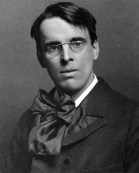
-William Butler Yeats

I was looking for the Yeats quote that I used to have in my Facebook, which is this one: “Literature must take the responsibility of its power . . . and keep all its freedom.” 
But in looking online for it, I stumbled over the one above which I like even better.

The quote I picked is part of a longer bit of conversation, in which he explains that “Now as to magic. It is surely absurd to hold me “weak” or otherwise because I choose to persist in a study which I decided deliberately four or five years ago to make, next to my poetry, the most important pursuit of my life…If I had not made magic my constant study I could not have written a single word of my Blake book, nor would The Countess Kathleen have ever come to exist. The mystical life is the center of all that I do and all that I think and all that I write.”

Now I can’t agree with that in its entirety, as I have written and created before and after magic entered my life, but what I can agree with is that my “mystical life” – my soul fire – is at the heart “of all that I do and all that I think and all that I write.” And that is visible in some of the poetry I have posted here.

My Three Nominations are:

Beauty Beyond Bones

Happy Parents, Happy Children

and

Soul Therapist

* My quote on Day #1

3 Days Quote Challenge – Day 1

I’m so excited; I’ve been nominated for my very first challenge and game on WordPress since I started my two blogs!

Thank you SyncWithDeep!!!!!!!!!!!!!

Here are the rules:

  1. Thank the person who nominated you.
  2. Post a quote for three consecutive days (1 quote for each day).
  3. Share why this quote appeals so much to you.
  4. Nominate 3 different bloggers for each day.

My First Quote Is:

“Success is the sum of small efforts,
repeated day in and day out.”

-Robert Collier

This quote is something I found in a calendar or something. I cut it out and it is on the front of my day planner, like so:

0411182232.jpg

to remind and inspire me that it is the little, mundane things like To Do lists, and calendars that lead to the fruition of goals, and my goals in particular.

It encourages me to keep plugging away every day even if there don’t appear to be immediate results.

It reminds me that while I have to create a day planner binder to keep track of all that I am trying to accomplish, it is WORTH it. And that all these annoying little tasks have a meaning greater than the sum of their parts.

I nominate:

  1. JalvisQuotes, ha ha
  2. Keith Garrett, and
  3. Matthew Waters

Up ↑