The Hundred Fourth Psalm, by Henry Vaughan

for Tarot Vidente, since they liked the other one : )

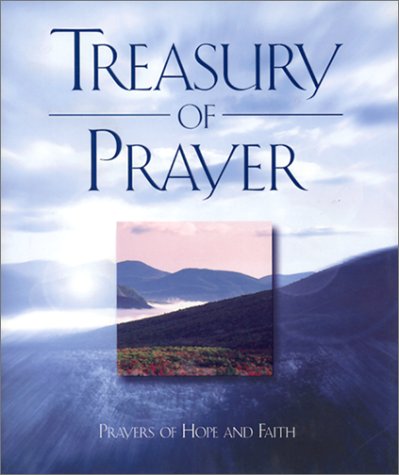
Taken from Treasury of Prayer: Prayers of Hope and Faith

The poem “The Hundred Fourth Psalm” by Henry Vaughan . I think he did a really nice job:

Up, O my soul, and bless the Lord. O God,
My God, how great, how very great art Thou!
Honor and Majesty have their abode
With Thee and crown Thy brow.

Thou Clothest Thyself with light, as with a robe,
And the high, glorious heavens Thy mighty hand
Doth spread like curtains round about this globe
Of air and sea and land.

The beams of Thy bright chambers Thou dost lay
In the deep waters, which no eye can find;
The clouds Thy chariots are, and Thy pathway
The wings of the swift wind.

In Thy celestial, gladsome messages
Dispatched to holy souls sick with desire
And love of Thee, each willing angel is
Thy minister of fire.

Thy arm unmovable forever laid
And founded the firm earth; then with the deep
As with a veil Thou hidst it; Thy floods played
Above the mountains steep.

At Thy rebuke they fled; at the known voice
Of their Lord’s thunder they retired apace:
Some up the mountains passed by secret ways,
Some downwards to their place.

O Lord my God, how many and how rare
Are Thy great works! In wisdom hast Thou made
Them all, and this the earth and every blade
Of grass we tread, declare.

Thou sendest Thy spirit forth, and they revive;
The frozen earth’s dead face Thou dost renew.
Thus Thou Thy glory through the world dost drive
And to Thy works art true.

Thine eyes behold the earth, and the whole stage
Is moved and trembles; the hills melt and smoke
With Thy least touch; lightnings and winds that rage
At Thy rebuke are broke.

Therefore as long as Thou wilt give me breath
I will in songs to Thy great name employ
That gift of Thine, and to my day of death
Thou shalt be all my joy.

I’ll spice my thoughts with Thee, and from Thy word
Gather true comforts; but the wicked liver
Shall be consumed. O my soul, bless they Lord!
Yea, bless thou Him forever!

Henry Vaughan

8 Days Til Christmas: The Advent Wreath from the Lutherans in Germany

Inspired by Yule: A Celebration of Light and Warmth by Dorothy Morrisonyule

Morrison’s book says the Advent Wreath “initially came from the Lutherans,” which I found to be very cool be cause that is the first church I can remember attending, as well as that is the church that I was confirmed in.

As she explains, the wreath is traditionally made of evergreen and has four candles arranged at each “side” of it. Four Sundays out from Christmas the church has someone light a candle, and one is lit each Sunday until Christmas occurs.

***

Something I did NOT know, and which was not in Morrison’s book (due to space considerations), was that the candle is supposed to burn all week long, “to welcome the Light of the world” (capitalization mine). I guess they can’t really do that now (and would they even have done it in the beginning?) due to safety issues, but that is a really nice tradition to think of. One source says that the very first Advent wreath had “twenty small red candles and four large white candles” in it (Richie). A Lutheran minister had made it for the kids to count down to Christmas. The little red candles were lit on the weekdays while the big white ones were the Sunday candles. But I still can’t imagine they would just leave them burning the entire day.

In present time the German colors are usually red for the four big candles, and sometimes a fifth white one in the middle to represent the birth of Christ, though colors sometimes vary according to different traditions. North American Lutherans use violets and blues and whites.

This is supposed to be a traditional German advent wreath:

braeucheimadvent-1_big.jpg
http://www.newliturgicalmovement.org/

And something else that Morrison doesn’t go into detail about is the symbolism of the individual candles themselves, which I REALLY think is cool:

  • The first candle symbolizes hope and is called the “Prophet’s Candle.” The prophets of the Old Testament, especially Isaiah, waited in hope for the Messiah’s arrival.
  • The second candle represents faith and is called “Bethlehem’s Candle.” Micah had foretold that the Messiah would be born in Bethlehem, which is also the birthplace of King David.
  • The third candle symbolizes joy and is called the “Shepherd’s Candle.” To the shepherd’s great joy, the angels announced that Jesus came for humble, unimportant people like them, too. In liturgy, the color rose signifies joy.
  • The fourth candle represents peace and is called the “Angel’s Candle.” The angels announced that Jesus came to bring peace–He came to bring people close to God and to each other again.
  • The (optional) fifth candle represents light and purity and is called “Christ’s candle.” It is placed in the middle and is lit on Christmas Day.

(Richie)

Right from the Source’s Mouth, St. Matthews Lutheran Church, is an explanation of the Advent season itself as well as a much more poetic description of the candle meanings. Check it out if you get a chance.

When I was little, it was exciting as a child to see each additional candle get lit and then when all four were burning, we knew Christmas was near!

So, Thank You to the Lutheran branch of Christianity, for this awesome Christmas tradition!


Works Cited

Morrison, Dorothy. Yule: A Celebration of Light and Warmth. St. Paul, MN, Llewellyn
Publications, 2000.

Richie, Laura. “Advent Wreath & Candles: Understanding the Meaning, History &
Tradition. Crosswalk.com. 22 August 2018, https://www.crosswalk.com/special
coverage/christmas-and-advent/advent-wreath-candles-understanding-the
meaning-history-tradition.html, Accessed 17.12.2018.


Tarot’s Not the Only Guidance Out There

“Learning to Pray”
taken from Treasury of Prayer: Prayers of Hope and Faith

by Marjorie Holmes

You know, Lord, how well You know, the years when I didn’t pray (or didn’t think I prayed). How could I pray to someone whose very existence I doubted? How could I ask for help from a force I spurned?
Yet all the while I was hungering for You, groping to find Your hand as I stumbled in the darkness of my needs . . . “If I could pray,” I thought. “If I could only learn to pray.”
But I felt foolish when I tried; I felt phony, insincere. My doubts seemed to rise up like a mockery between us. And You knew my follies and faults all too well. My tongue was inarticulate – it winced to form the words. My own self-scorn made me impotent, dumb.
I would get up from my fumbling so called prayers with an empty heart, feeling rejected, turned away. (Was there some secret rubric others had discovered? Some key that would make the heavens open, unlock the special doors?)

I was wrong. In a while, maybe from sheer persistence, something began to happen within me. A sense of being accepted, however unworthy. (no -not merely accepted, welcome, welcomed home!) And the deep excited stirrings of trust in a power I could not see.

Then I went to the formula You gave in the Sermon on the Mount.
“Our Father who are in heaven.” How kind that seems. “Hallowed be Thy name.” The gentle beginnings of worship . . .

“Thy kingdom come” (within me). “Thy will be done” (take over my life, I”m not doing so well) “on earth as it is in heaven.” (I like this earth. I don’t know about heaven, but it must be a wonderful place.)

“Give us this day our daily bread” (just enough for today, Lord, enough time and money and strength to get through this one day) . . . “and forgive us our trespasses as we forgive” (are my trespasses blocking the road to You? and my lack of forgiveness for those who’ve hurt me?).

“Lead us not into temptation” (this I don’t understand – You couldn’t, You wouldn’t – just hang on to me when I am tempted, give me the will not to yield). “Deliver us from evil” (yes, yes, that’s what I mean – deliverance).

 “For Thine is the power and the glory forever and ever.” (It is, it is, it hast to be, and the more often I admit it, express it, the more I know it’s true!)
So in this way I began to get deliverance, Lord. The deliverance I sought. From self-doubt, which was so deeply enmeshed with my doubts of You.

And to learn the fundamentals of prayer: worship, submission, acceptance, plea, and then more worship to seal it. And I began to know then as I realize now that worship itself is the key. The magic key. Prayer brings You close when we come not merely seeking help, but because we want to be with You.

***

“Prayer of Praise”
by Saint Augustine

But let my soul praise Thee that it may love Thee,
And let it tell Thee Thy mercies that it may praise Thee.
Without ceasing Thy whole creation speaks Thy praise-
The spirit of every man by the words that his mouth directs to Thee,
Animals and lifeless matter by the mouth of those who look upon them.
That so our soul rises out of its mortal weariness unto Thee,
Helped upward by the things Thou hast made
And passing beyond them unto Thee who has wonderfully made them:
And there refreshment is and strength unfailing. Amen.

Seven Reasons Why . . .

. . . We Need Mister Rogers More Than Ever

JUNE 6, 2018 BY PAUL ASAY, of Watching God

Photo: Fred Rogers on the set of his show Mr. Rogers Neighborhood from the film, WON’T YOU BE MY NEIGHBOR?, a Focus Features release. Credit: Jim Judkis

trolley.jpg

On Feb. 2, 1968—Groundhog Day—Simon & Garfunkel recorded the final version of their classic song “Mrs. Robinson” for their album Bookends. It includes one of the most poignant lines in all of pop music:

Where have you gone, Joe DiMaggio? Our nation turns its lonely eyes to you.

“I thought of him as an American hero and that genuine heroes were in short supply,” Paul Simon later told The New York Times. And indeed, in early 1968, they were. The country was mired in the Vietnam War. Protests raged at home. The country had never felt so divided, so angry. After the heroics of World War II and the unbridled American self-confidence of the 1950s, the United States must’ve felt like a stick bent to its breaking point, ready to splinter.

The country needed a hero.

On Feb. 19, 1968, just 17 days after Simon & Garfunkel put Mrs. Robinson in Bookends, it got one.

Most folks didn’t know it yet, of course. Mister Rogers’ Neighborhood, featuring a rather un-telegenic, soft-spoken minister as its host, director, singer, writer and puppeteer, was meant for kids too young to tie their shoes, much less write think-pieces for The New Yorker. But as Focus Features’ new, wonderful documentary Won’t You Be My Neighbor (out in theaters beginning this weekend) illustrates, he was a good hero for those turbulent times. And, I think, the sort of hero we need more than ever.

Fred Rogers wasn’t a television novice when he launched Mister Rogers’ Neighborhood on NET (the forerunner to PBS) in 1968. He’d worked on a show called The Children’s Corner for Pittsburgh’s WQED years before, introducing Daniel Tiger when (according to the movie) one of the live show’s ancient film clips broke.

But if Daniel’s introduction to the world of television was a spontaneous thing, Mister Rogers’ Neighborhood was anything but. As Neighbor unpacks for us, Rogers carefully thought through every word and lyric, almost every moment, crafting a show that would never talk down to its young viewers but wrap an arm around them and talk to them. Rogers called the space between his cameras and his viewers’ televisions “holy ground,” and indeed something sacrosanct took place there.

When you contrast what Mister Rogers did back then with our own frenetic entertainment culture—heck, with our entire national climate—it’s striking to see the difference, and feel just what we’re lacking. Consider:
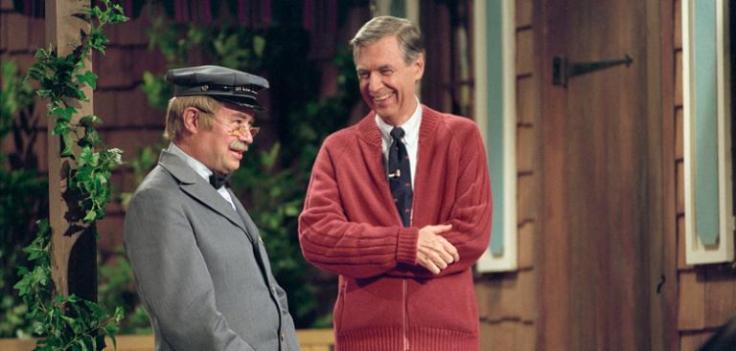
rogers2David Newell (left) and Fred Rogers (right) from the show Mr. Rogers Neighborhood in the film, WON’T YOU BE MY NEIGHBOR?, a Focus Features release. Credit: Lynn Johnson

He was quiet. “For Fred, silence was his delight,” we’re told in Neighbor. We’re treated to a montage of some of the many times that he stopped talking and just let his audience … listen.

Most folks would call that “dead air,” back then as they would now. Today, to sit in silence is practically a cultural sin. We bring our phones and devices of distraction with us wherever we go, even into the toilet stall. I do, too. It’s like we can’t stand to be alone with ourselves. To grow quiet. To think. Rogers reminds us that when we lose silence, we lose much more. We lose, maybe, a bit of ourselves.

He listened. This might be one of the most remarkable things I was struck with watching Neighbor: How well he listened to those around him—no matter how young they were, no matter what they said. Children might tell him something funny. Or tragic. Or profound. He treated each missive as a gift—an almost sacred message, from one child of God to another.

I used to think of myself as a good listener. I’m not so sure anymore. I “talk” for a living, here and elsewhere. And sometimes, even when I’m listening even to the people most precious in my life, I feel my attention wander. I can feel my eyes darting, looking for the next distraction; search the conversation for another opportunity to let folks know what I think. How many times have I lost an opportunity to listen and learn? How many moments have I lost to create a greater connection? More broadly, how many of our societal ills and angsts could be treated and even healed through just … listening? I think we’d be surprised.
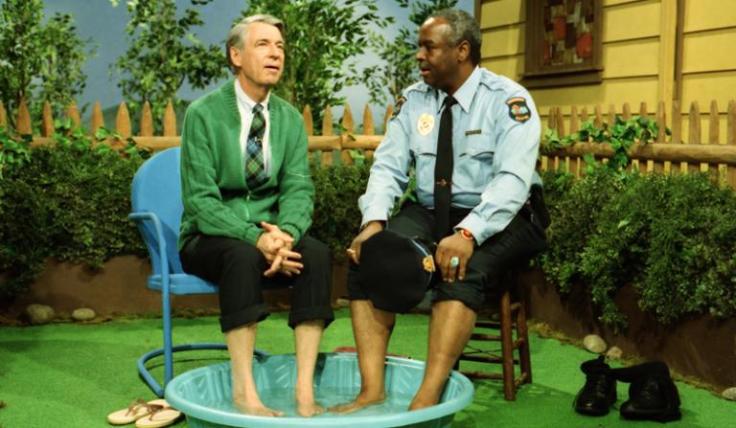
rogers 3Fred Rogers (left) with Francois Scarborough Clemmons (right) from his show Mr. Rogers Neighborhood in the film, WON’T YOU BE MY NEIGHBOR?, a Focus Features release. Credit: John Beale

He was gentle, but strong. In Neighbor, we see scenes aplenty when Rogers’ famous gentleness was mocked and lampooned. And indeed, his ultra-sincere persona and curious, almost lyrical-sounding voice can foster a very Rogers-esque stereotype of a milquetoast man. Truth is, he was anything but. He stood for things and, once he found his footing, never wavered from them. He stared down congress. He fought for racial equality. The very first week Mister Rogers’ Neighborhood was on the air, according to Neighbor, Rogers tackled the Vietnam War.

Today, we see politicians and pundits bluster and blow like big, bad wolves—huffing and puffing, bellowing and retracting what they just bellowed. Rogers did Theodore Roosevelt one better: He spoke quietly, and instead of carrying a stick, he bore only his convictions. And so often, they were enough.

We all have inconsistencies to our characters, of course. We sin. We fail. We think or say or do things we should not. Allof us do. Even, I’m sure, Mister Rogers. But everything I’ve read about him—and what I see in Neighbor—suggests that Rogers was as true to, and as honest with, himself, and thus to his audience, as anyone can be. He didn’t just pretend to listen: He listened. He didn’t just pretend to care: He cared. Tom Junod’s 1998 Esquire profile of Rogers illustrates that really well, and it might be one of the best profiles I’ve ever read. (caution, though. It can be profane at times.)

rogers 4.jpgFred Rogers with Daniel Tiger from his show Mr. Rogers Neighborhood in the film, WON’T YOU BE MY NEIGHBOR?, a Focus Features release. Credit: The Fred Rogers Company

He was vulnerable (in a way). Neighbor makes the case that Mr. Rogers’ puppet alter-ego was the watch-wearing Daniel Striped Tiger—sweet, shy and deeply vulnerable. Rogers admits in the movie that it’s far easier to let Daniel express his fears than he, as a grown man, to admit to them. But he, unlike most of us, still admits to them. And through Daniel, he gave the children he spoke to permission to express their own fears and doubts.

Funny that, in our social media age where we all share so much of ourselves, rarely do we share our vulnerability. We post our smiling vacation pictures and brag about our kids and express our deep political convictions in sometimes strident, shrill terms. But I think that often it’s our vulnerabilities, not our strengths, that make people gravitate toward us and allow them to trust us. I think that that’s part of what Paul meant in 2 Corinthians 12, when he told us that God’s power is made perfect in weakness. Rogers’ knew that, too. Our weaknesses open the door to fellowship. And that’s where strength is found.

He was devout. Rogers was an ordained minister, and throughout Neighbor we hear how Mister Rogers’ Neighborhood was his pulpit. He preached from his fake television house and told his young viewers that they were loved just as they were—but they still needed to learn and grow, too. And that brings us to, perhaps, Rogers’ most powerful, enduring message.

He believed in us all. That feels like a strong statement, but I don’t think it’s a stretch. Rogers believed in us all. He believed that all of us—young and old—were worthy of love. We were lovable.
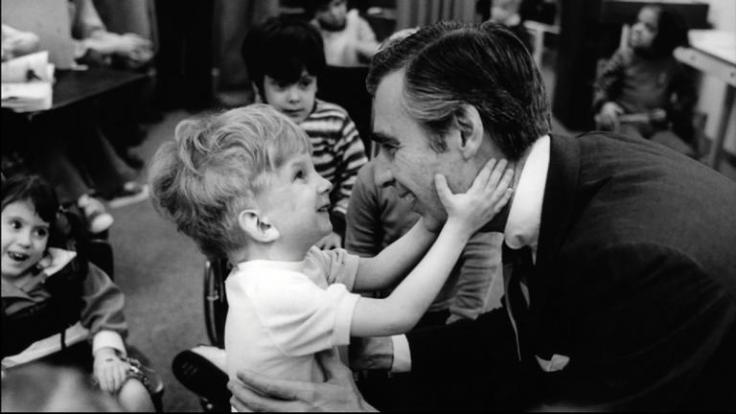
rogers 5.jpgFred Rogers meets with a disabled boy in the film WON’T YOU BE MY NEIGHBOR?, a Focus Features release. Credit : Jim Judkis


trolley

paul ansey.jpgAbout Paul Asay

Paul Asay is an author, journalist and entertainment critic who now serves as a senior associate editor for the popular Christian entertainment review site Plugged In (pluggedin.com). He has been published in a variety of other secular and Christian publications, including The Washington Post, The Gazette in Colorado Springs, YouthWorker Journal and Beliefnet.com. He has a love of old movies, a disturbing affinity for bad ones and an appreciation for all things geek.

 

Living the Gospel . . .

Excellent article!

 Living the Gospel Wholeheartedly in a “Yes, But” World
MAY 24, 2018 BY BRAD ROTH
taken from Patheos.com

How does Christian faith frame our understanding of community security?  We’ll often hear that yes we’re called to live out the ideals of the gospel, but we live in a broken world.

The sentiment is true enough.  But what strikes me about this line of thinking is the subtle way it seems to imply that the gospel–the good news about and by Jesus–is something not quite fit for the violent world we live in.  Love your enemies, give to those who ask of you, turn the other cheek, forgive as your Father has forgiven. Those are lovely sentiments–to be honored, for sure–but seemingly designed for a gentler world, a softer, safer, more pastel world where bad guys with guns don’t mow down school children.  It’s a dangerous place out there. And so in this great, big, rough and tumble world–many suppose–we’ve got to footnote and bracket and asterix the gospel to make it possible to live it out. We’ve got a good gospel in a broken world, so we split the difference.

I get it.  Hard choices abound.  The gospel of Jesus can seem like teaching for kinder and gentler times.

Except Jesus didn’t live and teach in kinder and gentler times.  The Roman world was a empire-building, slave-keeping, barbarian-skull-crushing society where it was the citizen’s duty to kill malformed infants by exposure.  Jesus got crucified–that most debased and debasing form of execution–for his teaching. The great rabbi wasn’t even offered hemlock. Jesus knew what he was teaching, understood the implications, was not naive to the ways of the world.  He taught precisely what the world needed to hear.  If anything, we’re living in kinder and gentler times, times impacted by two-thousand years of the gospel rejigging the Western mind.  Human rights. The value of every person, regardless of age or capacities. Those are gospel values.

We so often hold a “yes, but” concept of the gospel.  We’re called to love our enemies. Yes, but they want to bomb us.  We’re called to be merciful. Yes, but they only respect force. We’re called to turn away from hatred, adultery, lies, revenge.  Yes but, what can we say? TV leaves its skim.

It’s interesting that in the fifth century when St. Augustine put his prodigious mind to the challenge of Christian governance and the use of force, his theological angle was not to punch an escape hatch in Jesus’ teaching.  Augustine counseled that the use of force must never be undertaken with hatred toward the enemy, must see peace as its goal, and must be carried out within the broader matrix of the Christian virtues, like chastity, sobriety, and moderation.  Just war, for Augustine, was waged (hesitantly, with reservation) as an expression of love of neighbor. That is to say, for the Christian even war must be waged as the outworking of the gospel.

Regardless of whether or not we ultimately agree with Augustine’s conclusions, his instinct to live the gospel wholeheartedly is compelling.  Augustine does not offer a yes, but approach to the Christian life.  For him, the teaching and example of Jesus informs everything we will undertake as his followers: work, play, speech, worship, family, community.  Even war. All of human life is inflected and informed by the gospel.

What this means is that as followers of Jesus, our goal is to do all things as an expression of Jesus’ teaching and ways.  This is true for those who heal and help. But it’s just as true (and maybe even more urgently so) for those who police and protect–sometimes with deadly force.

It turns out that yes, but is a cul-de-sac that actually marginalizes and diminishes the gospel.  There’s no halfway with Jesus.  We follow his gospel wholeheartedly.

Or we don’t.

About Brad Roth

brad roth


Satin Kisses

“Love the Lord your God
with all your passion and prayers and intelligence and energy”

Mark 12:28-34

The sun blazed hot, molten, orange in my soul that day;
it was the day I said goodbye.
I looked at him and he looked at me;
I thought some more, and then began to cry …
Remembering satin kisses and the like.

Humiliated by my pointless defeat,
I slumped again, into my life of despair and pain.
At this point I knew he would go,
just like I knew nothing would ever be the same …
Remembering his hands, satin kisses and the like.

My feet were bone dead weary so long ago
that I cannot even say or guess how long. I just know.
I know this in the same way I know that I will likely never belong …
Remembering his strength, satin kisses and the like.

He was, and is, no ordinary creature of daylight
places or of simple male spaces.
Has more than I thought I knew,
of various names and complicated faces …
I remember gentleness without guile, satin kisses and the like.

He has left his lasting fingerprint
on the very fabric of my heart, and even my soul.
Leaving me to wonder once again,
if it is my place or destiny, to ever be whole …
Remembering with tears not soft, his satin kisses and the like.


copyright 2005 mds. All Rights Reserved.


Gospel Truth

I was his wife
I was his life mate
I was a part of him
I know he was part of me

Was his wife remembered
Was his love returned
Was any of it worth it in the end

His wife blended into history, then obscurity
Wife to companion, companion to harlot
Wife to harlot, harlot to whore

I was his wife


Copyright 2006 mds. All Rights Reserved.

Up ↑